Glow-in-the-dark epoxy floors in Sarasota and Manatee
A floor that charges in daylight and glows softly once the lights go out. Here is how glow and black-light finishes differ, where they suit a Gulf Coast home, and what to ask before you pick one.
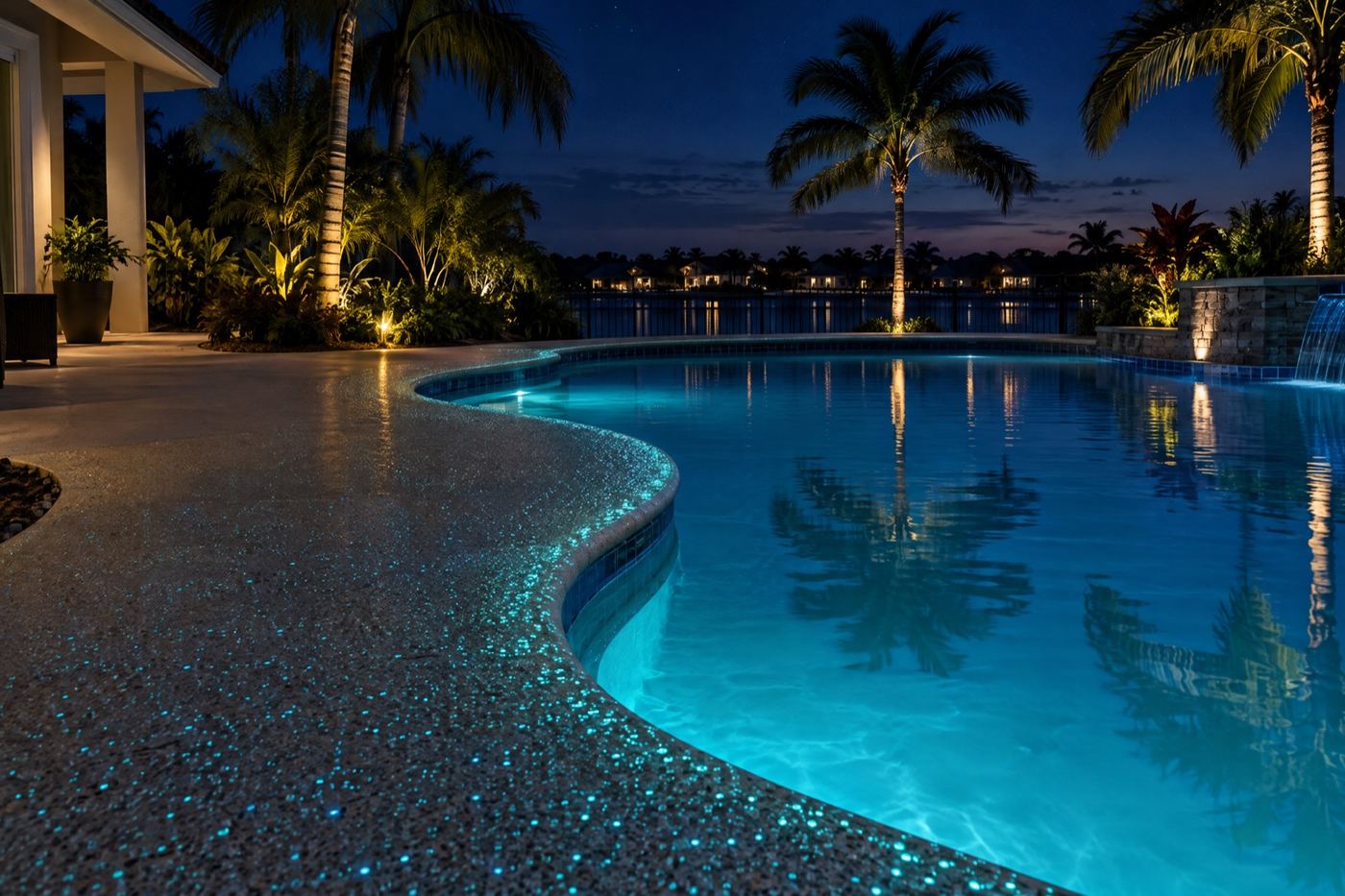
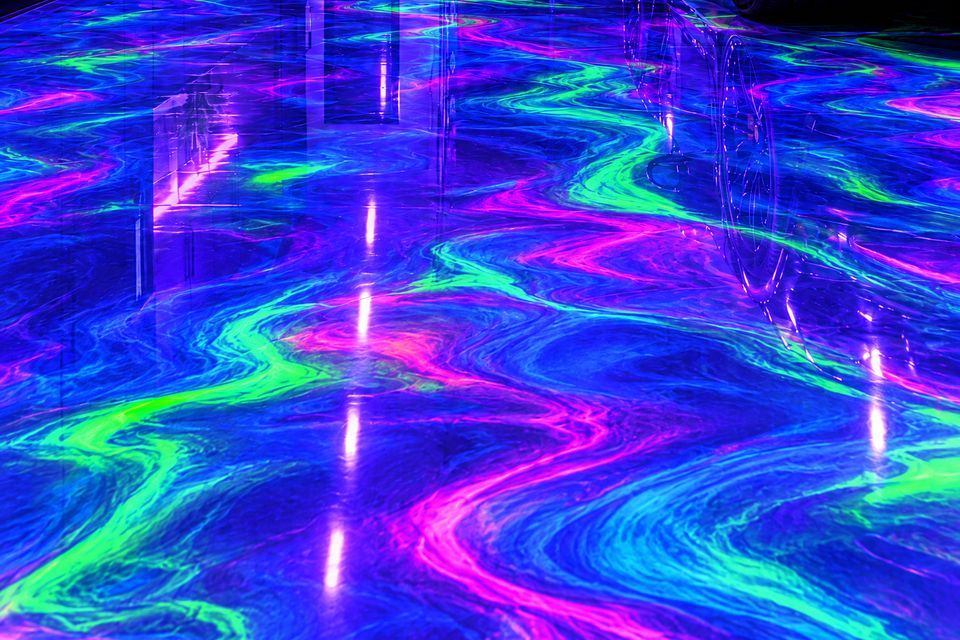
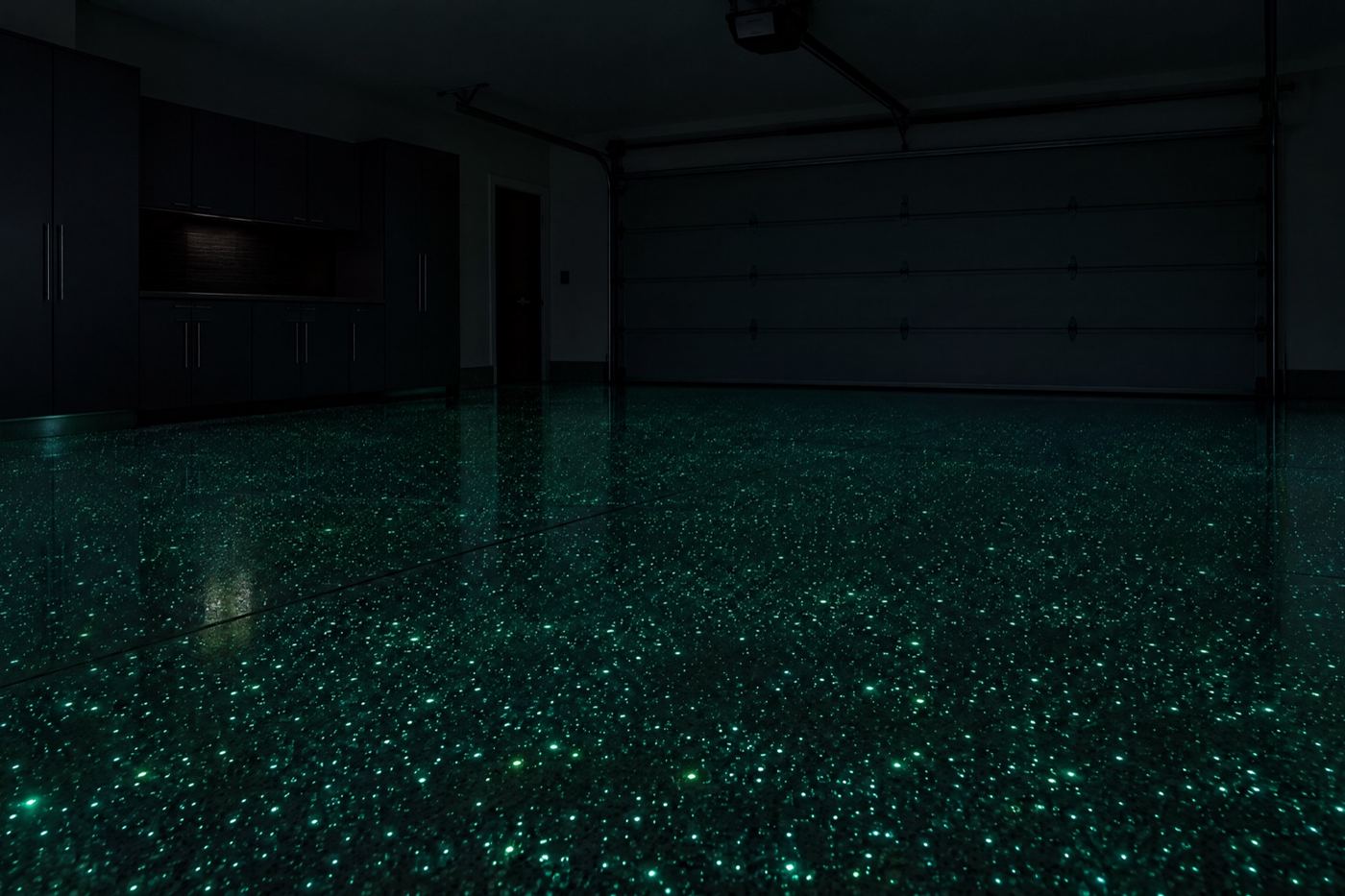
Design examples (AI renderings) to show the look. Not photos of past jobs. Your installer brings physical samples to the quote.
What is the difference between glow-in-the-dark and black-light epoxy?
A glow-in-the-dark floor stores light and glows on its own after the room goes dark; a black-light floor only lights up while a UV lamp is shining on it.
People use both names for the same idea, but they behave differently. Both are a normal epoxy system with a special pigment in one layer, sealed under a clear topcoat. What changes is where the light comes from. If you want a floor that still shows a soft glow with every light off, you want photoluminescent. If you control the lighting, as in a game room or home theater, and want vivid neon color on demand, a UV-reactive floor is the one to look at.
Glow in the dark
Photoluminescent pigment. Charges from daylight, room lights or LEDs and glows with no lamp. Brightest at first, then fades slowly over hours.
Black light (UV)
Fluorescent pigment. Shows bright color only while a UV lamp is on, and goes back to normal the moment it is off.
In daylight
Glow pigment usually reads as a pale tint in the floor. UV pigment reads as a bright color. Both feel like any other gloss floor.
Where does a glow floor work best around Sarasota?
Wherever the space really goes dark: garages, game rooms, kids' rooms and home theaters inside, and lanais, pool decks and garden paths outside.
From Siesta Key and Lakewood Ranch to Venice, North Port, Palmetto and Parrish, the same few spots come up. A glow floor is an accent, not a light source. It is there to make a room memorable or to mark a path, so think about where a soft glow would help or just look good.
Garages and workshops
A soft glow across the floor or along the walk to the door, so the space is not pitch black when the lights go off.
Game rooms and theaters
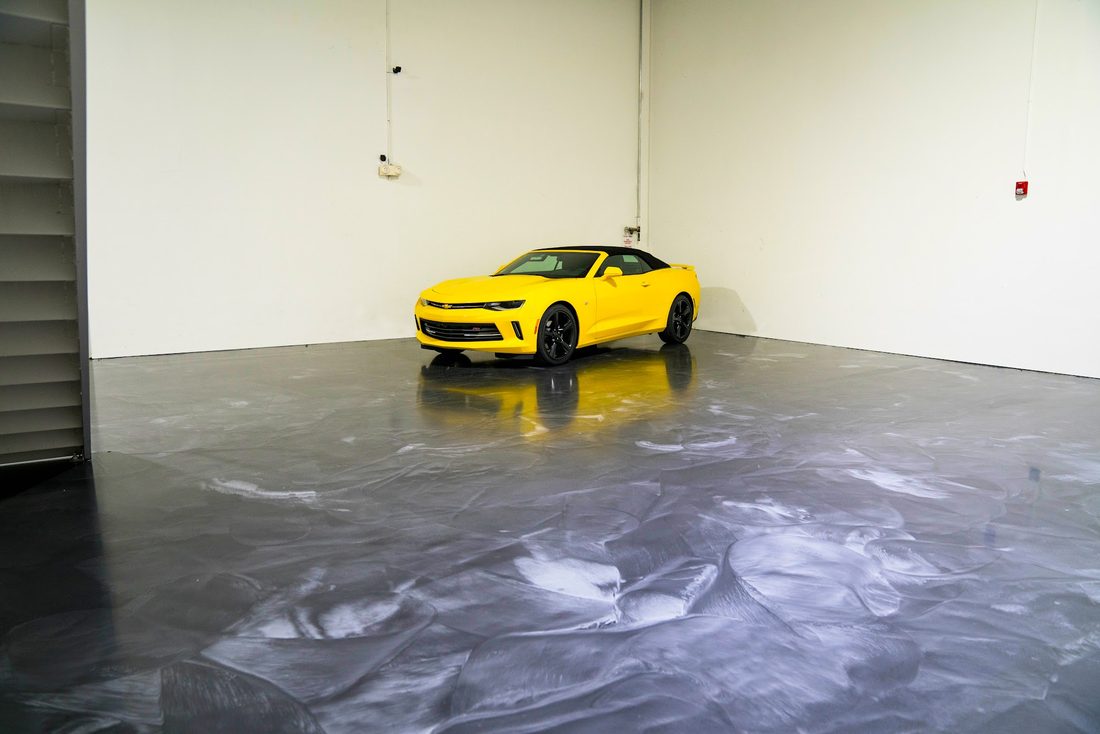
A floor that keeps glowing after the screen goes dark. Pairs well with a metallic base for a showroom look with the lights on.
Kids' rooms and play rooms
Stars, swirls or a full floor that glows at bedtime and charges again from the room lights the next day.
Lanais and pool decks
Path edges, borders or a pattern that glow after sunset. Outdoor spots need the right topcoat and texture, covered below.
How long does a glow floor glow, and what does it need?
It glows brightest in the first minutes after dark and fades over several hours, and it needs light to recharge.
Expect a soft glow, not a lamp. A floor in a room that never gets bright light will glow weakly, while daylight and bright LEDs charge it best. The strength of the glow also depends on how much pigment goes into the floor, which is one of the things that moves the price.
The pigment sits in one layer and is sealed under a clear topcoat. The topcoat takes the traffic and cleaning, so a busy floor may need the topcoat refreshed after years of use, like any gloss floor.
It fades
Strongest right after the lights go off, then dimmer over the following hours until it is charged again.
It needs light
Daylight and bright LEDs charge it best. A closet-dark room gives a weak glow.
More pigment, more glow
Often added to a metallic floor as one more color rather than used alone.
Can a glow-in-the-dark finish go on a lanai or pool deck?
Yes, if the system is built for outdoors: a UV-stable topcoat so it does not yellow in the sun, and enough texture for wet, bare feet.
Florida sun is good for glow pigment, because it charges the floor well during the day, so path edges and borders glow after sunset. The catch is the topcoat. Plain epoxy yellows in direct sun, so an outdoor job needs a UV-stable topcoat, and a smooth garage-style gloss is the wrong surface around a pool. Ask which texture suits a wet deck, and how the glow is kept where feet actually walk.
UV-stable topcoat
Keeps the clear coat from yellowing under direct sun on a lanai or open deck.
Texture for wet feet
Finer is easier to sweep; coarser grips better on slopes and steps. Ask for samples of both.
Borders and paths
Glow is often used as an edge or a path marker outdoors, not across the whole deck.
Should the whole floor glow, or just a border or pattern?
Most people pick a border, a pattern or an accent color on a metallic base, because it looks good with the lights on and still glows at night.
A full-floor glow uses more pigment and shows more of that pale tint by day. A border, stripe or pattern gives the same after-dark effect, and with the lights on it looks like a normal finished floor. If you are unsure, ask to see a small sample under both a bright light and a dark closet.
Whole floor
The strongest effect and the most pigment. Best in a dedicated game room or kids' space.
Border or pattern
A frame around the floor, a path to the door or a simple shape. Less pigment, still a clear glow.
Over a metallic base
Glow added as an extra color in a metallic floor, so daytime looks polished and night looks special.
How much does a glow-in-the-dark floor cost in Sarasota?
Every floor is quoted in person after someone looks at the slab, so you get a written number before any work starts.
A glow floor is a standard epoxy system with extra pigment and a bit more care, so the same things that move any floor price apply here. The pieces below are the ones that matter most.
Amount of pigment
A full-floor glow uses much more than a border or a pattern.
Slab condition
Cracks, old coatings and moisture need work before anything goes down.
Size and layout
Square footage, plus any steps, borders or custom shapes.
Indoor or outdoor
Outdoor jobs need a UV-stable topcoat and texture for wet feet.
How a glow floor gets done, step by step
Free visit and physical samples
Someone looks at the slab, measures the space and shows you samples of each finish, including the glow and black-light options. You get a written price before anything is booked.
Moisture test
Moisture rising through concrete is a common reason coatings lift, so the slab is tested first. Where it reads high, a moisture-tolerant primer goes down.
Diamond grinding
The surface is ground with a vacuum attached to keep dust down. Grinding opens the concrete so the coating can bond.
Crack and joint repair
Cracks and chipped edges are filled and leveled so they do not show through the finished floor.
Base coat and glow layer
The color base goes on, then the layer with the glow or UV pigment, applied evenly so the effect reads clean.
Clear topcoat and walkthrough
A clear topcoat seals the pigment and takes the wear, then you walk the floor with the installer, ideally with the lights off.
Glow-in-the-dark floor questions
Is a glow-in-the-dark epoxy floor durable?
Yes. The pigment sits in one layer and is sealed under a clear topcoat, and that topcoat takes the traffic, cleaning and vehicle wear like any epoxy floor. Over years of heavy use, the topcoat may need refreshing.
How long does it glow?
It is brightest in the first minutes after the lights go out and fades slowly over several hours. It recharges whenever it gets bright light again. Think of it as a soft accent, not a light source.
Do I need a black light for it?
Not for a glow-in-the-dark floor, which charges from daylight and ordinary lights. A black light is only needed for a UV-reactive floor, which shows its color while the lamp is on.
Which colors glow brightest?
Greens and aqua blues are usually the brightest and longest lasting. Other colors can look softer. Ask to see physical samples in the dark, because a photo on a screen will not tell you.
Can I get a glow finish on a pool deck or lanai?
Yes, with an outdoor system: a UV-stable topcoat so it does not yellow, and a textured surface for wet feet. Sun charges the pigment well, so edges and paths glow after sunset.
Can only a border or a pattern glow?
Yes, and it is a popular choice. A border, stripe or simple shape gives the after-dark effect with less pigment, and the floor looks like a normal finished floor with the lights on.